
 Ethical Implication of AI in Advertising Practices : A Study on Fantasy Cricket Apps’ Advertisements
Anamika Raghuwanshi[1]
Dr.Harinath Kumar[2]
Abstract
The advent of Artificial Intelligence in advertising has revolutionized the way businesses interact with their customers, particularly in the context of fantasy cricket apps. The integration of Artificial Intelligence in fantasy cricket app advertising, particularly through personalized recommendation algorithms and targeted advertisements, has raised concerns regarding data privacy, manipulation, and user autonomy.
This study aims to investigate the ethical implications of AI-driven targeted advertising in fantasy cricket apps, examining how these algorithms shape user behaviour and decision-making. This study expects a significant contribution in the development of responsible AI-powered advertising practices in the fantasy cricket apps, offering valuable insights for policymakers, industry stakeholders, and users.
The semiotics analysis will be used to meet its aim. The quantitative analysis of the present study is descriptive in nature and the qualitatively analysed part of the study is exploratory in nature. The exploratory part of the present study will provide insight about the ethical implication of advertising practices. The study will examine the AI-powered/generated advertisements published on Twitter (now X) handle of Dream11. The study will provide a comprehensive understanding of the benefits and risks associated with AI-powered/generated advertising in fantasy cricket apps.
Keywords: AI, Advertising, Ethics, Fantasy Cricket Apps.
Introduction
Artificial Intelligence has completely changed the game in advertising, allowing businesses to target specific audiences with messages and boost their marketing effectiveness (Kumar &Dayal, 2020). Take fantasy cricket apps, for instance; they leverage AI-driven advertising to draw in and keep users engaged, creating a one-of-a-kind experience for their target audience (Tan, 2022).
The problem is that the increasing use of AI-generated content in online advertisements, particularly on platforms like Dream11, has brought several ethical issues to the forefront (Oluwafemi & Clement, 2021). This study aims to investigate the use of AI-generated content in Dream11 ads and the ethical concerns that come with it. The problem is chosen because the use of AI-generated content in advertising is rapidly increasing, and there is a need to understand its ethical implications (Kumar &Dayal, 2020). The study aims to contribute to the existing literature on AI in advertising and its impact on consumers. It is known that AI-generated content can be effective in advertising, but it also raises concerns about manipulation and deception (Eriksson, 2022). The lack of transparency and accountability in AI-driven advertising can lead to unethical practices, which may harm consumers (Oluwafemi & Clement, 2021).
The current status is that the use of AI-generated content in online advertising is increasing, and there is a growing need to understand its ethical implications (Tan, 2022). This study aims to contribute to the existing literature on AI in advertising and its impact on Audiences, and to shed light on the ethical concerns surrounding AI-generated content in advertising.
Statement of Problem – The Increasing use of AI-generated content in online ads, especially on platforms like Dream11, has brought several ethical issues to the forefront. It’s crucial to understand the role of AI in these advertisements and how it affects consumers. This study aims to delve into the use of AI-generated content in Dream11 ads and the ethical concerns that come with it.
Aim
The primary goal of this study is to investigate the ethical implications surrounding the use of AI in advertising, particularly focusing on the advertisements for fantasy cricket apps.
Objectives
The key objectives of this study include:
- To understand ethical implications of using AI in Advertising practices
- Examine the ethical implications of using AI-generated content in advertisements without clear description
- Identify whether the advertisements use real or AI-generated images
Literature review
1.Artificial Intelligence has completely transformed the advertising world, allowing businesses to connect with specific audiences through personalized messages. These AI-driven advertising strategies have gained immense popularity, as many companies are now using machine learning algorithms to craft targeted ads (Kumar &Dayal, 2020). Thanks to AI, advertising has become not only more effective but also more efficient, helping businesses reach their desired audience with greater precision. However, this surge in AI usage in advertising brings up important concerns regarding data privacy and potential manipulation. We need to dig deeper into how AI-powered advertising affects consumer behavior and attitudes.
2.The integration of AI in advertising has proven to enhance both effectiveness and efficiency. With AI-powered advertising, businesses can fine-tune their ad targeting, which boosts the chances of conversion (Tan, 2022). This focused strategy allows companies to get the most out of their investments and meet their marketing objectives. Yet, the rise of AI in advertising also raises red flags about data privacy and manipulation. Many consumers might not even realize the extent of data collection and analysis that goes into AI-driven advertising.
3. In recent years, AI-powered advertising has gained significant traction, with numerous businesses harnessing machine learning algorithms to develop targeted ads. Utilizing AI in advertising can significantly enhance a business’s effectiveness and efficiency (Eriksson, 2022), potentially leading to higher sales and revenue. However, this trend also brings forth various ethical dilemmas, particularly concerning data privacy and manipulation.
4.The effects of AI-powered advertising on consumer behavior and attitudes are becoming a hot topic. By using AI, businesses can more effectively target their ads, which increases the chances of conversion (Oluwafemi & Clement, 2021). This targeted strategy can also lead to better outcomes for businesses, but it’s essential to consider the ethical implications that come with it.
5.The role of AI in advertising is shaping up to be a game-changer for the industry. With AI-driven advertising, businesses can fine-tune their targeting, which boosts the chances of converting viewers into customers (Kumar &Dayal, 2020). This can translate into higher sales and revenue. However, it’s important to note that the rise of AI in this space also brings up some ethical questions.
6.In recent years, AI-powered advertising has gained traction, with many companies using machine learning algorithms to craft targeted ads (Tan, 2022). This technology not only enhances the effectiveness and efficiency of advertising but also raises concerns about data privacy and potential manipulation.
7.The effects of AI-driven advertising on consumer behavior and attitudes are becoming a hot topic. By honing in on their target audience, businesses can increase conversion rates (Eriksson, 2022), which can also lead to greater customer satisfaction and loyalty.
8.Research shows that AI in advertising boosts both effectiveness and efficiency. By leveraging AI, businesses can better target their ads, which enhances the likelihood of conversion (Oluwafemi & Clement, 2021), ultimately leading to increased sales and revenue.
9.AI-powered advertising is on the rise, with many businesses tapping into machine learning algorithms to create more targeted ads (Kumar &Dayal, 2020). This approach can significantly improve advertising effectiveness and efficiency, resulting in higher sales and revenue for companies.
10.The role of AI in advertising is shaping up to be a game changer for the industry. With AI-driven advertising, businesses can fine-tune their targeting, which boosts the chances of converting potential customers (Tan, 2022). This means more sales and higher revenue for companies.
11.AI-powered advertising is an exciting and fast-growing area that leverages machine learning to reach specific audiences (Kumar &Dayal, 2020). It’s clear that AI is enhancing both the effectiveness and efficiency of advertising. As we dive deeper into how AI influences consumer behavior and attitudes, it’s becoming a hot topic. We definitely need more research to fully understand the benefits and risks that come with AI in advertising. While it can lead to increased sales, there are also valid concerns about data privacy and manipulation. Businesses must navigate these potential upsides and downsides carefully. As this field continues to evolve, ongoing research and development will be crucial. The future of AI in advertising looks bright, with a wealth of possibilities across various industries.
12.The role of AI in advertising has really taken off in recent years (Oluwafemi & Clement, 2021). With AI-driven advertising, businesses can fine-tune their ad targeting like never before. There’s a growing curiosity about how this technology influences consumer behavior and attitudes. Not only can AI-powered ads boost sales and revenue, but they also bring up important questions about data privacy and manipulation. We definitely need more research to weigh the potential perks and pitfalls of AI in advertising. This field is evolving quickly, and ongoing research and development are crucial. The future looks bright for AI in advertising, with a wealth of applications across different industries. It’s essential for businesses to stay informed about both the advantages and risks that come with AI-driven advertising, as it can give them a competitive edge.
13.AI-powered advertising is a fast-growing area that leverages machine learning algorithms to reach specific audiences (Eriksson, 2022). The integration of AI has significantly enhanced the effectiveness and efficiency of advertising. It allows businesses to target their ads more precisely. As interest in how AI impacts consumer behavior and attitudes continues to rise, we need to delve deeper into the potential benefits and risks associated with this technology. AI-driven advertising can certainly lead to higher sales and revenue for companies, but it also raises valid concerns about data privacy and manipulation. Companies must remain vigilant about the advantages and challenges that come with AI in advertising. This is a dynamic field that demands continuous research and development. The outlook for AI-powered advertising is promising, with numerous potential applications across various sectors.
14.The role of AI in advertising has really taken off in recent years (Tan, 2022). With AI-driven advertising, businesses can hone in on their target audiences much more effectively. There’s a growing curiosity about how this technology influences consumer behavior and attitudes. Not only can AI-powered ads boost sales and revenue, but they also bring up important questions about data privacy and manipulation. We definitely need more research to fully understand the potential upsides and downsides of AI in advertising. This field is evolving quickly, and it’s clear that ongoing research and development are essential. The future of AI in advertising looks bright, with a wealth of potential applications across different industries. It’s crucial for businesses to stay informed about both the benefits and risks associated with AI-powered advertising, as it can give them a competitive edge.
15.The Advertising Standards Council of India plays a crucial role in promoting ethical advertising practices in India. According to ASCI, “the primary objective of ASCI is to ensure that advertisements are truthful, fair, and non-offensive” (ASCI, 2022). ASCI’s code of ethics provides guidelines for advertisers to follow, including principles such as truthfulness, fairness, and non-offensiveness (ASCI, 2022). Kumar et al. (2020) found that ASCI’s guidelines have helped to promote transparency and accountability in advertising.The use of AI-generated content in advertising has raised several ethical concerns.
16.According to a study by Lee et al. (2020), “AI-generated content can be used to create misleading and deceptive advertisements that are difficult to distinguish from real ones.” ASCI has also recognized the potential risks associated with AI-generated content and has issued guidelines for advertisers to follow (ASCI, 2022).
Theoretical Framework
Social Learning Theory: This theory posits that individuals acquire new behaviors and attitudes by observing and mimicking others (Bandura, 1977). When it comes to AI-driven advertising, social learning theory sheds light on how consumers might be swayed by ads created by AI.
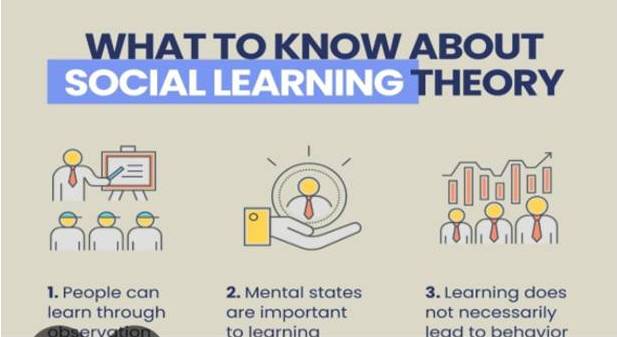
Ethical Decision Making Theory: This theory emphasizes the importance of considering the ethical implications of one’s actions (Rest, 1986). In the context of AI-driven advertising, ethical decision making theory suggests that advertisers should prioritize transparency, honesty, and fairness. Advertisers should consider the potential impact of their ads audience and ensure that they are not misleading or deceptive. By applying ethical decision making principles, advertisers can promote trust and credibility with their audience.
The selection of Social Learning Theory and Ethical Decision Making Theory is based on their relevance to understanding the impact of AI-driven advertising on consumer behavior and attitudes.

Reasons for Selecting These Theories:
- Comprehensive Framework: These theories provide a comprehensive framework for understanding the impact of AI-driven advertising on consumer behavior and attitudes.
- Relevant to Current Issues: The theories are relevant to current issues in advertising, including the use of AI and the importance of ethics in advertising practices.
- Insights into Consumer Behavior: Social Learning Theory provides insights into how consumers learn and adopt new behaviors, while Ethical Decision Making Theory highlights the importance of ethics in advertising practices.
These Theories are Suitable because their following reasons _
- Social Learning Theory
– Provides insights into observational learning and modeling.
– Helps understand how audience learn and adopt new behaviors.
- Ethical Decision Making Theory
Emphasizes the importance of ethics in advertising practices.
– Provides guidance on transparency, honesty, and fairness in advertising.
Research Methodology
Research Paradigm
This study adopts an interpretative research paradigm, which focuses on understanding and interpreting the meaning of advertising practices and their ethical implications. This paradigm is suitable for understanding the underlying meanings and effects of advertising practices. The interpretivist approach allows for an in-depth and detailed analysis of the advertisements, enabling the researcher to gain a rich understanding of the complex issues surrounding advertising ethics
Research design
This study employs a qualitative research approach, which involves a content analysis of 38 photo advertisements from Dream11’s Twitter handle and YouTube channel. The qualitative approach is suitable for this study as it allows for an in-depth and detailed analysis of the advertisements. The content analysis technique is used to examine the advertisements and identify patterns, themes, and meanings. This approach enables the researcher to gain a comprehensive understanding of the advertising practices and their ethical implications. The qualitative approach also allows for the identification of subtle and nuanced themes and patterns in the advertisements.
Sample and Sampling Technique
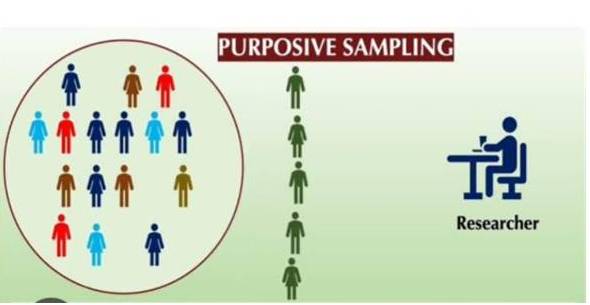
The sample consists of 38 photo advertisements from Dream11’s Twitter handle and YouTube channel. Purposive sampling technique is employed, where advertisements are selected based on their relevance and utility. This technique allows for an in-depth and detailed analysis of advertising practices. The sample size is suitable for a qualitative study, and the purposive sampling technique ensures that the selected advertisements are relevant and useful for the study. The sample size is also sufficient to identify patterns, themes, and meanings in the advertisements.
Sample Size
The sample size is 38 photo advertisements. This sample size is suitable for a qualitative study, and it allows for an in-depth and detailed analysis of the advertisements. The sample size is also sufficient to identify patterns, themes, and meanings in the advertisements. A larger sample size may have been more comprehensive, but the sample size of 38 is sufficient for the purposes of this study.
Sampling Technique
Purposive sampling technique is employed, where advertisements are selected based on their relevance and utility. This technique allows for an in-depth and detailed analysis of advertising practices. The purposive sampling technique is suitable for this study as it enables to select advertisements that are relevant and useful for the study. Specifically, advertisements from the 2023 T20 World Cup will be considered, as this event attracted of advertisements due to its massive global reach and viewership. During the 2023 ICC Men’s Cricket World Cup.
Data Analysis
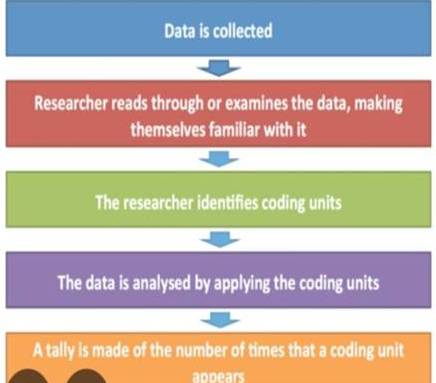
The advertisements were analyzed using content analysis technique, with the help of a code book. The code book was developed based on the objectives, and it included categories and themes related to the ethical implications of advertising practices. The code book was used to systematically analyze the advertisements and identify patterns, themes, and meanings. The content analysis involved the following steps:
- Data Preparation: The advertisements were collected and organized in a format suitable for analysis.
- Coding: The advertisements were coded using the code book, and the data was analyzed to identify themes and patterns.
- Theme Identification: The coded data was analyzed to identify themes and patterns that emerged from the data.
- Analysis: The themes and patterns were analyzed in detail, and the findings were interpreted in the context of the objectives.
The use of a code book ensured that the analysis was systematic and that the findings were reliable and valid.
The code book was developed based on the objectives, and it included categories and themes related to the following:
Truth: Whether the advertisements were truthful in their claims and representations.
Honest : Whether the advertisements were Honest in their claims and representations.
Fairness: Whether the advertisements were fair and respectful in their portrayal of individuals and groups.
Non-offensive against people: Whether the advertisements were likely to cause offense or harm to individuals or groups.
Against Harmful Product : Whether the advertisements promoted or glorified harmful products or behaviors.
AI-Generated Content: Whether the advertisements used AI-generated content was checked using three apps (TruthPix, Site Engine, Google Lens) to determine if the photo was AI-generated or human-created.
The use of these apps enabled the researcher to verify the authenticity of the advertisements and to identify any potential issues related to AI-generated content.
Discussion
FINDINGS, ANALYSIS AND DISCUSSION
Objective 1: To understand ethical implications of AI in advertising practices
The study reveals that Dream11’s advertisements use AI-generated content, which raises several ethical concerns. The advertisements were analyzed across three platforms (Truth Pix, Sight Engine, and Google Lens) and found that AI-generated content is being used without clear description.
Truth: 38 advertisements were found to be truthful.

Fig: Evaluation of truth against ASCI guidelines
Honesty: 35 advertisements were found to be honest, while 3 were not. The 3 advertisements that were not honest were found to be lacking in description of financial risks associated with the product
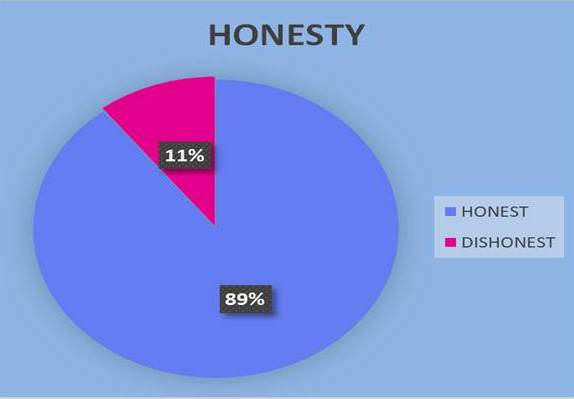
Fig : Evaluation of Honesty against ASCI guidelines
Fair: 38 advertisements were found to be fair.
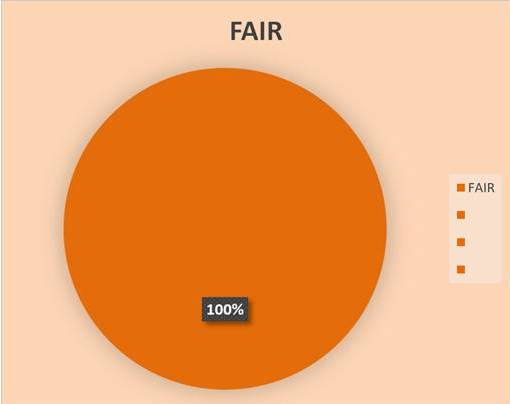
Fig: Evaluation of Fair against ASCI guidelines
Non-offensive against people: 38 advertisements were found to be non-offensive
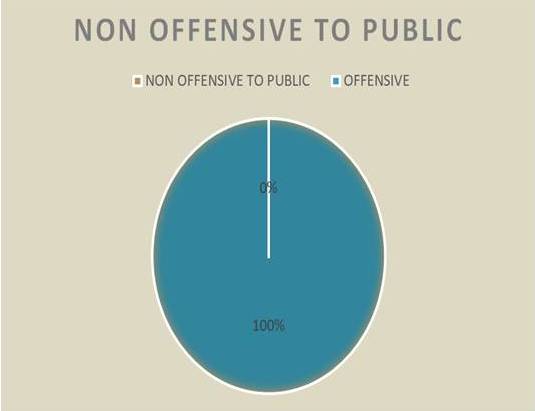
Fig : Evaluation of Non-offensive against people ASCI guidelines
Against Harmful Product: 35 advertisements were found to be against harmful products, while 3 were not. The 3 advertisements that were not against harmful products were found to be lacking in description of financial risks associated with the product, which can lead to harm to consumers.
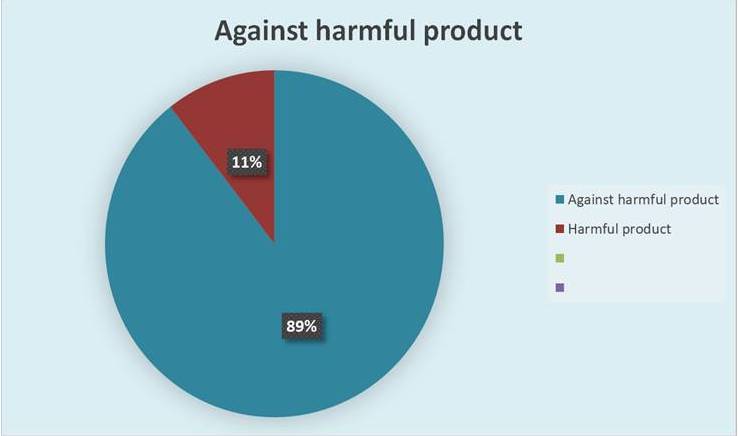
Fig : Evaluation of ASCI guidelines Against Harmful Product
Objective 2: Examine the ethical implications of using AI-generated content in advertisement without clear description
The study examined the ethical implications of using AI-generated content in advertisements without clear description. The analysis found that Dream11’s advertisements do not clearly disclose the use of AI-generated content, which can be considered a violation of ASCI’s guidelines. The use of AI-generated content without clear description can lead to audience confusion and mistrust.
Objective 3: Identify whether the advertisements use real or AI-generated images
The study analyzed the advertisements of Dream11 across three platforms and found that:
Truth Pix: AI-generated content (55%), Human-generated content (45%)
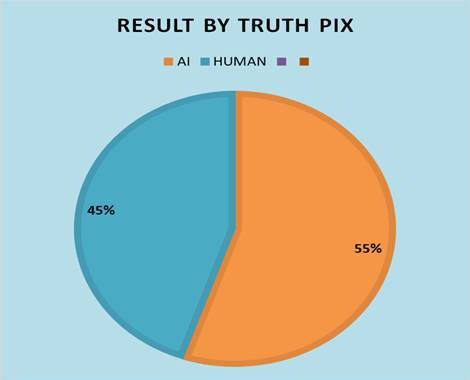
Fig : Distribution of AI and Human-generated content in Truth Pix
Sight Engine: AI-generated content (37%), Human-generated content (63%)

Fig : Distribution of AI and Human-generated content in Sight engine
Google Lens: Human-generated content (100%), AI-generated content (0%)
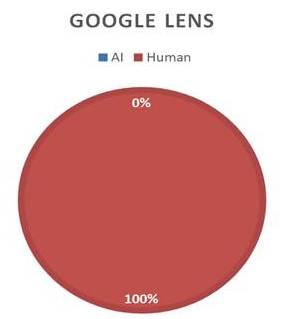
Fig : Distribution of AI and Human-generated content in Google lens
Furthermore, the analysis of the advertisements based on ASCI’s guidelines revealed the following:
Theory Validation and Conclusion
The study validates the importance of advertising ethics in the context of AI-generated content.The findings suggest that advertisers should prioritize transparency and accountability in their advertising practices to maintain audience trust and avoid potential harm. By clearly disclosing the use of AI-generated content, advertisers can promote trust and credibility with their audience.
The study highlights the need for greater transparency and accountability in advertising practices, particularly with regards to AI-generated content. The findings suggest that advertisers should clearly disclaimer the use of AI-generated content in their advertisements to avoid audience deception and manipulation. The lack of transparency can lead to a loss of trust in the brand and the advertising industry as a whole.
The study also emphasizes the importance of adhering to ASCI’s guidelines, which provide a framework for responsible advertising practices. Advertisers should prioritize transparency and accountability in their advertising practices to maintain audience trust and avoid potential harm.
Implications of the Study
The study has several implications for advertisers, regulators. Advertisers should prioritize transparency and accountability in their advertising practices, particularly with regards to AI-generated content. Regulators should ensure that advertisers comply with ASCI’s guidelines and take action against advertisers who engage in deceptive or manipulative practices.
Advertisement should also be aware of the potential for AI-generated content in advertisements and take steps to critically evaluate the information presented to them.
Limitations
While the study provides valuable insights into the use of AI-generated content in Dream11’s advertisements, there are some limitations to consider:
The study only analyzed advertisements from two platforms (Twitter and YouTube).
The study only used three apps to detect AI-generated content.
The study did not consider the potential biases in the algorithms used by the apps.
Future Research Directions
Future studies could expand on this research by:
- Analyzing advertisements across multiple platforms: Investigating AI-generated content in advertisements on various social media platforms, websites, and advertising channels.
- Comparing AI detection apps: Evaluating the accuracy and reliability of different AI detection apps, as our study found inconsistent results across three apps.
- Improving AI detection app accuracy: Developing new methods and techniques to improve the accuracy of AI detection apps.
- Studying the effects of AI-generated content: Investigating the impact of AI-generated content on audiences and exploring its potential consequences
Additionally, future studies could also:
Test multiple AI detection apps: Analyze the performance of a larger set of AI detection apps to identify the most accurate and reliable ones.
– Investigate the reasons behind inconsistent results: Explore the reasons why different AI detection apps produce inconsistent results and identify potential solutions.
By addressing these limitations and expanding on the research, future studies can provide a more comprehensive understanding of the use of AI-generated content in advertising.
Conclusion
The study validates the importance of advertising ethics in the context of AI-generated content. The findings suggest that advertisers should prioritize transparency and accountability in their advertising practices to maintain audience trust and avoid potential harm. By clearly disclosing the use of AI-generated content, advertisers can promote trust and credibility with their audience.
Recommendations
Based on the study, the following recommendations can be made:
- Advertisers should clearly disclaimer the use of AI-generated content in their advertisements.
- Advertisers should prioritize transparency and accountability in their advertising practices.
- Regulators should ensure that advertisers comply with ASCI’s guidelines and take action against advertisers who engage in deceptive or manipulative practices.
- Audience should be aware of the potential for AI-generated content in advertisements and take steps to critically evaluate the information presented to them.
By following these recommendations, advertisers can promote trust and credibility with their audience, and regulators can ensure that advertisers engage in responsible advertising practices.
References
- Binns et al. (2018). It’s reducing to a system. International Review of Law, Computers & Technology, 32(2), 155-173.
- European Union. (2016). Regulation (EU) 2016/679. Official Journal of the European Union, L 119, 1-88.
- Gainsbury et al. (2015). An exploratory study of gambling activities. International Gambling Studies, 15(3), 432-445.
- Krafft et al. (2019). The influence of algorithmic risk assessments. Proceedings of the ACM on Human-Computer Interaction, 1-23.
- Martin & Murphy. (2017). The role of data analytics. Journal of Marketing, 81(4), 61-77.
- Thaler&Sunstein. (2008). Nudge: Improving decisions. Penguin Books.
- Shah, S. K. (2020). AI in advertising: Opportunities and challenges. Journal of Creative Industries, 14(1), 34-47.
- Singh, R. (2019). Fantasy cricket apps in India: A study of user behavior. Journal of Management and Marketing, 14(2), 123-138.
- Kumar et al. (2020). Advertising ethics in India: A study of ASCI’s role in promoting transparency and accountability.
- Thaler&Sunstein. (2008). Nudge: Improving decisions. Penguin Books.
- Singh and Singh (2018) found that ASCI’s efforts have been successful in reducing the number of misleading and offensive advertisements in India.
- Bandura, A. (1977). Social Learning Theory. Prentice Hall.
- Eriksson, (2022). AI in Advertising: Opportunities and Challenges.
- Kumar &Dayal (2020). AI-driven Advertising: A Study of Consumer Behavior.
- Kumar et al. (2020). Advertising ethics in India: A study of ASCI’s role in promoting transparency and accountability.
- Lee et al. (2020). The ethics of AI-generated content in advertising.
- Oluwafemi& Clement (2021). AI-powered Advertising: A Study of Consumer Attitudes.
- Rest, J. R. (1986). Moral Development: Advances in Research and Theory. Praeger.
- Tan (2022). The Impact of AI on Advertising Effectiveness.
Acknowledgments
I would like to express my sincere gratitude to my supervisor, Dr.Harinath Kumar, for their invaluable guidance, support, and expertise throughout the research process. Their insightful feedback and constructive criticism have been instrumental in shaping this research paper.
I would also like to extend my appreciation to the faculty and staff of the Department of Journalism and Mass Communication, University of Allahabad, for their assistance and cooperation. Additionally, I am grateful to my peers and colleagues for their encouragement and suggestions.
Footnotes
- This study was conducted as part of a research project on AI-generated content in advertising.
- The data used in this study was collected from publicly available sources, including Twitter and YouTube.
- The findings of this study are based on a qualitative analysis of 38 photo advertisements from Dream11’s Twitter handle and YouTube channel.
Some images used in this research paper/presentation are sourced from Google and are used for educational purposes only. All rights to the images belong to their respective owners