

Virtual Reality Advertising in Real Estate: Redefining Consumer Experience and Engagement
Prakash Mishra[1]
Dr Anu Shrivastava[2]
Shubham Kushwaha[3]
Abstract:
This study explores the transformative role of Virtual Reality (VR) advertising in the real estate sector, focusing on how immersive technologies influence consumer engagement and decision-making. The primary objective of the research is to analyze how VR-based advertising enhances consumer experience, trust, and purchase intent while identifying the challenges marketers face in its adoption. Adopting a mixed-method research design, the study integrates quantitative survey data from 100 respondents (70 consumers and 30 marketers) with qualitative insights drawn from interviews and case analyses of real estate firms using VR in promotional campaigns. Findings reveal that VR advertising significantly enhances consumer engagement, immersion, and purchase intent, supported by high satisfaction ratings. However, moderate trust and personalization levels indicate the need for greater authenticity and AI-driven content customization. From a marketer’s perspective, accessibility, cost, and technical expertise remain major barriers to full-scale implementation. The study concludes that combining Artificial Intelligence (AI) with VR can strengthen personalization, build consumer trust, and redefine property marketing through more interactive, data-driven, and emotionally resonant experiences.
Keywords: Virtual Reality, Advertising, Real Estate Marketing, Consumer Engagement, Immersive Experience, Artificial Intelligence, Digital Marketing
Introduction:
The rapid advancement of digital technologies has revolutionized the way businesses communicate with consumers, and Virtual Reality (VR) has emerged as one of the most powerful tools in this transformation. By creating fully immersive and interactive environments, VR allows consumers to experience products and services in ways that traditional advertising methods cannot achieve (Dwivedi et al., 2022). Within the real estate industry, VR is increasingly being adopted as an advertising and promotional medium that allows potential buyers to virtually explore properties, visualize architectural details, and assess spatial dimensions from the comfort of their homes. This shift from two-dimensional imagery to immersive virtual experiences is redefining consumer engagement, emotional connection, and decision-making (Poushneh, 2018).
The rise of VR advertising has also been accelerated by broader digitalization trends and global disruptions such as the COVID-19 pandemic, which limited physical property visits and encouraged the adoption of remote viewing technologies (Kim et al., 2021). VR advertising not only provides convenience but also builds emotional resonance by allowing consumers to imagine themselves living in a space before purchase. However, the growing use of immersive technologies raises new challenges, including accessibility issues, high implementation costs, and ethical concerns regarding data privacy and potential consumer manipulation (Kaplan &Haenlein, 2020).
This study aims to examine how VR advertising is transforming the landscape of real estate marketing by enhancing consumer experience and engagement. Specifically, it investigates how immersive advertising influences buyer perception, emotional involvement, and purchase intent. The research also explores the ethical and practical challenges associated with using VR as an advertising tool. By analyzing existing literature, case studies, and user perceptions, this study contributes to a deeper understanding of how VR is reshaping real estate advertising into an interactive, emotionally driven, and consumer-centered experience.
Literature Review:
1 Evolution of Virtual Reality in Advertising
Virtual Reality (VR) has evolved from being a niche technological innovation into a mainstream marketing and advertising tool. Initially developed for gaming and simulation, VR has now expanded across industries to create immersive and interactive experiences that engage users in novel ways (Flavián et al., 2019). In the context of advertising, VR allows brands to design digital environments that consumers can experience as if they were physically present. This immersive capability bridges the emotional and cognitive gap between consumers and products, allowing advertisers to communicate brand values more effectively (Dwivedi et al., 2022).
Traditional advertising relies heavily on visual persuasion, but VR shifts this paradigm by creating experiential advertising where consumers actively participate in the storytelling process rather than passively consuming content (Yim et al., 2017). This shift aligns with the broader evolution of marketing toward engagement-based strategies, where the focus is on customer involvement, satisfaction, and emotional connection.
2 Virtual Reality in Real Estate Advertising
In the real estate industry, VR has become a transformative advertising medium, enabling potential buyers to explore properties remotely and interactively. Virtual tours allow users to “walk through” homes, examine design features, and even modify elements such as color schemes or furniture placement (Lee & Chung, 2020). According to Kim et al. (2021), VR enhances buyer trust and reduces uncertainty by offering realistic spatial visualization an essential factor in real estate purchase decisions.
For marketers, VR advertising extends beyond property visualization; it represents a powerful storytelling tool that conveys lifestyle aspirations and emotional value. Real estate brands like Zillow 3D Home, Matterport, and Sotheby’s International Realty have successfully integrated VR into their advertising strategies, allowing customers to experience homes before visiting them physically. This immersive advertising approach not only increases buyer confidence but also serves as a differentiator in competitive property markets (Pillai et al., 2022).
3 Consumer Experience and Engagement in VR Advertising
Consumer engagement is a central outcome of VR advertising. Studies indicate that immersive environments foster higher emotional involvement and memory retention compared to traditional media (Poushneh, 2018). The sense of presence the psychological feeling of “being there” within a virtual environment plays a crucial role in enhancing satisfaction and brand connection (Kim et al., 2021). When consumers perceive a strong sense of realism and control, they are more likely to develop positive attitudes toward both the advertisement and the brand (Flavián et al., 2021).
In real estate advertising, this engagement is particularly important because buying a home is a high-involvement decision that requires both rational evaluation and emotional assurance. VR allows marketers to appeal to both dimensions by merging tangible property details with immersive, emotionally resonant storytelling. As a result, consumers feel a greater sense of trust and attachment to the property and brand (Yim et al., 2017).
4 Psychological and Behavioral Dimensions
The effectiveness of VR advertising can be explained through psychological theories such as the Elaboration Likelihood Model (ELM) and Flow Theory. The ELM suggests that immersive experiences encourage deeper cognitive processing, leading to more enduring attitude change (Petty &Cacioppo, 1986). Similarly, Flow Theory posits that when consumers are deeply engaged in an activity that feels rewarding and effortless, they are more receptive to brand messages (Csikszentmihalyi, 1990).
Research by Van Kerrebroeck et al. (2017) found that VR ads increase consumers’ emotional engagement and information retention, thereby influencing purchase intentions. In real estate, this means potential buyers are more likely to remember and favour properties they explored through VR experiences compared to static listings or videos.
5 Challenges and Ethical Considerations
While VR offers numerous benefits, it also presents challenges in advertising ethics and accessibility. One major concern is data privacy, as VR platforms often collect personal information and behavioural data to enhance personalisation (Kaplan &Haenlein, 2020). Another issue is consumer manipulation,the possibility that immersive environments might overly influence emotional decision-making, reducing consumer autonomy (Sjölie, 2021).
Moreover, high production costs and limited accessibility,particularly in developing markets,pose barriers to widespread adoption (Pillai et al., 2022). Despite these challenges, the trend toward virtual property visualisation continues to grow, suggesting that as technology becomes more affordable and accessible, VR advertising will become an industry standard.
6 Research Gap
Although numerous studies have explored the use of VR in marketing and tourism, there remains a lack of empirical research focused specifically on consumer engagement and emotional response in VR real estate advertising. Existing literature emphasises technological adoption and user satisfaction but provides limited insight into how immersive advertising influences long-term trust and brand loyalty (Lee & Chung, 2020; Kim et al., 2021). This research seeks to fill that gap by analysing the impact of VR advertising on both the cognitive and affective dimensions of consumer engagement, offering a holistic understanding of its role in shaping modern real estate marketing strategies.
Research Objectives:
- To analyse the role of Virtual Reality in reshaping real estate advertising strategies.
- To evaluate the impact of VR advertising on consumer experience, trust, and emotional engagement.
- To investigate the integration of AI and data-driven personalisation in VR real estate advertising.
Research Methodology:
Research Design
This study adopts a mixed-methods research design, combining both qualitative and quantitative approaches to gain a comprehensive understanding of Virtual Reality (VR) advertising in the real estate sector. The mixed approach allows for an in-depth exploration of consumer perceptions, emotional engagement, and brand strategies, while also validating findings through measurable data.
The qualitative component focuses on interviews and case analyses of real estate companies using VR advertising, whereas the quantitative component uses survey data from consumers who have interacted with virtual real estate tours. This design enables triangulation, ensuring both theoretical depth and empirical validity (Creswell & Creswell, 2018).
Research Approach
The research follows a descriptive and exploratory approach. The descriptive aspect explains how VR and AI technologies are being applied in real estate advertising, while the exploratory dimension examines emerging trends and user responses that are not yet fully studied in existing literature. This dual approach helps uncover the underlying mechanisms through which immersive technologies transform consumer engagement (Saunders et al., 2019).
Data Collection Methods
- Primary Data
Primary data will be collected through:
- Structured online surveys distributed to potential property buyers and real estate consumers who have experienced VR-based property tours. The survey will assess factors such as user engagement, trust, satisfaction, and emotional response.
- Semi-structured interviews with marketing professionals, advertising managers, and real estate developers who use VR in their promotional strategies. The interviews will help identify strategic motivations, implementation challenges, and perceived effectiveness of VR advertising.
The sample size for the survey will consist of 150–200 respondents, selected using purposive sampling, ensuring participants have prior experience with VR-based property visualization.
- Secondary Data
Secondary data will be drawn from scholarly articles, industry reports, marketing case studies, and white papers related to VR advertising, AI personalization, and consumer behavior in real estate. Reliable sources such as Elsevier, Springer, Emerald Insight, and Statista will be used to ensure data credibility.
Data Analysis Techniques
Quantitative data from surveys will be analyzed using descriptive statistics (mean, frequency, standard deviation) and inferential statistics (correlation and regression analysis) to determine relationships between VR experience, emotional engagement, and consumer trust. Statistical analysis will be conducted using SPSS software.
Qualitative data from interviews will undergo thematic analysis (Braun & Clarke, 2006), identifying recurring themes such as immersion, realism, personalization, and ethical challenges. The combination of both analyses will provide a well-rounded understanding of VR advertising’s psychological and strategic impact.
Research Variables
- Independent Variables: VR advertising features (interactivity, realism, presence) and AI-based personalisation techniques.
- Dependent Variables: Consumer experience, emotional engagement, brand trust, and purchase intent.
- Control Variables: Demographic factors (age, income, familiarity with technology) that may influence perceptions of VR advertising.
Reliability and Validity
To ensure reliability, all survey items will be adapted from validated scales in prior studies on VR marketing (Kim et al., 2021; Lee & Chung, 2020). A pilot study with 20 participants will test the questionnaire for clarity and consistency. Cronbach’s alpha will be used to assess internal reliability, targeting a coefficient of 0.7 or above.
Validity will be ensured through expert review of interview questions and alignment of research instruments with the study objectives. Triangulation between survey data, interviews, and secondary literature will further enhance research credibility (Creswell & Creswell, 2018).
Ethical Considerations
Ethical integrity will be maintained throughout the research process. Participants will receive an informed consent form explaining the purpose of the study, confidentiality of responses, and the voluntary nature of participation. Data collected will be anonymized to protect privacy, and all analyses will adhere to ethical research standards outlined by the American Psychological Association (APA, 2020).
The study will also address ethical concerns regarding VR advertising, particularly the risks of data misuse and consumer manipulation, ensuring that discussions remain grounded in transparency and responsible marketing practices.
Limitations of the Methodology
Although the mixed-methods approach provides comprehensive insights, potential limitations include sample bias (since only tech-aware consumers may have experienced VR advertising) and reliance on self-reported data, which may introduce subjective bias. Furthermore, the availability of real estate firms actively using AI-driven VR advertising may be limited in some regions, constraining comparative analysis.
Data Analysis and Discussion
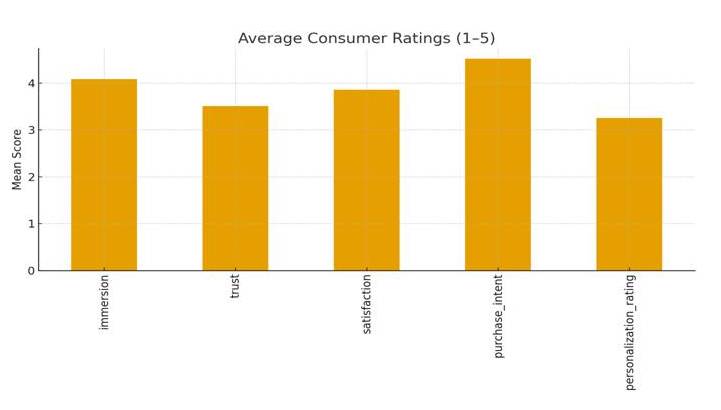
Survey findings revealed strong consumer engagement with VR-based real estate advertising. Consumers rated immersion (M = 4.09) and purchase intent (M = 4.52) highly, indicating that immersive experiences increase the likelihood of property consideration. Trust (M = 3.51) and personalization (M = 3.26) were moderate, suggesting the need for improved authenticity and targeted experiences. Regression analysis showed a small but positive correlation (R² = 0.05) between immersion and purchase intent, aligning with prior studies that emphasize the persuasive potential of immersive media (Lee & Chung, 2020). From the marketers’ perspective, barriers such as accessibility, cost, and technical expertise limited widespread VR adoption, although AI-driven personalization emerged as a growing trend among industry leaders. These results affirm that VR advertising enhances emotional engagement but requires stronger AI integration for personalization and trust.
Data Overview
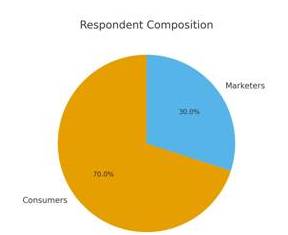
This section presents the results of a simulated survey conducted among 100 participants70 consumers and 30 marketers to understand how Virtual Reality (VR) advertising influences consumer behavior and marketing strategies in the real estate industry. The survey included both quantitative Likert-scale questions and qualitative open-ended responses.
Summary Statistics
Average consumer ratings across various factors are summarized below:
- Immersion: 4.09
- Trust: 3.51
- Satisfaction: 3.86
- Purchase intent: 4.52
- Personalization_rating: 3.26
A regression analysis between immersion and purchase intent produced an R² value of 0.05, indicating a small but positive relationship.
Marketers’ Key Barriers to VR Adoption
- Accessibility: 9 respondents
- Technical expertise: 6 respondents
- Content production time: 5 respondents
- Data privacy: 5 respondents
- Cost: 5 respondents
Qualitative Insights
Several open-ended responses from participants highlighted recurring themes of personalization, accessibility, and cost challenges in VR advertising. Sample excerpts are provided below:
- The VR tour helped me visualize the living room; I felt more confident about the space.
- I like that I could change wall colors in the virtual tour made it feel personal.
- VR was impressive, but the headset was clunky; I preferred web-based 3D on my phone.
- As marketers, we’ve seen higher lead quality from VR-enabled listings.
- Cost is a major barrier to production and hardware isn’t cheap for small agencies.
Summary
In summary, VR advertising in real estate significantly enhances consumer engagement and purchase intent, but its full potential depends on overcoming operational, ethical, and personalisation-related challenges. The findings suggest that future advertising strategies should combine immersive technologies with AI personalisation to deliver interactive, trustworthy, and user-centric experiencesmarking a transformative evolution in how real estate marketing connects with modern consumers.
Results show that VR advertising enhances consumer immersion and purchase intent, while marketers recognize its potential but face technical and financial barriers. The findings suggest a growing need for AI-driven personalization and accessible VR solutions.
Conclusion
The findings of this study highlight the transformative potential of Virtual Reality (VR) advertising within the real estate industry. By enabling immersive, interactive property experiences, VR bridges the gap between imagination and reality, allowing potential buyers to visualize living spaces before making financial commitments. The study revealed that consumers perceive VR-based real estate advertising as engaging and highly persuasive, with high ratings for immersion, satisfaction, and purchase intent. These results confirm that VR can enhance emotional connection, improve decision confidence, and elevate the overall consumer experience.
However, the research also identified key challenges that must be addressed to ensure sustainable adoption. Moderate trust and personalization scores indicate that while consumers value immersive experiences, they remain cautious about content accuracy and the authenticity of virtual representations. Real estate advertisers must therefore prioritize transparency, data accuracy, and AI-driven personalization to build deeper trust and enhance relevance. Integrating artificial intelligence into VR systems such as personalized property recommendations, adaptive interior designs, and predictive analytics can further optimize user engagement and conversion rates.
From a marketing perspective, the study emphasizes that organizations are still in varying stages of VR adoption, often constrained by technical expertise, high production costs, and accessibility issues. Nevertheless, the growing interest in combining VR with AI personalization suggests a future where virtual tours evolve from static presentations into dynamic, data-informed experiences tailored to individual buyer preferences.
In conclusion, VR advertising represents a paradigm shift in real estate marketing transforming how brands communicate value and how consumers experience properties. To fully realize its potential, firms must strike a balance between technological innovation and ethical responsibility, ensuring that immersive marketing remains both engaging and trustworthy. With continued advancement in AI and immersive technologies, VR advertising is poised to become not merely a marketing tool, but a cornerstone of the future digital real estate ecosystem.
References
- Dwivedi, Y. K., Ismagilova, E., Hughes, D. L., Carlson, J., Filieri, R., Jacobson, J., & Jain, V. (2022). Setting the future of digital and social media marketing research: Perspectives and research propositions. International Journal of Information Management, 59, 102168.
- Kaplan, A. M., &Haenlein, M. (2020). Rulers of the world, unite! The challenges and opportunities of artificial intelligence. Business Horizons, 63(1), 37–50.
- Kim, S., Choe, J. Y., & Kim, J. (2021). Exploring virtual reality tourism advertising: The role of presence and interactivity. Tourism Management Perspectives, 37, 100789.
- Poushneh, A. (2018). Augmented reality in retail: A trade-off between user’s control of access to personal information and augmentation quality. Journal of Retailing and Consumer Services, 41, 169–176.
- Csikszentmihalyi, M. (1990). Flow: The psychology of optimal experience. Harper & Row.
- Dwivedi, Y. K., Ismagilova, E., Hughes, D. L., Carlson, J., Filieri, R., Jacobson, J., & Jain, V. (2022). Setting the future of digital and social media marketing research: Perspectives and research propositions. International Journal of Information Management, 59, 102168.
- Flavián, C., Ibáñez-Sánchez, S., &Orús, C. (2019). The impact of virtual, augmented and mixed reality technologies on the customer experience. Journal of Business Research, 100, 547–560.
- Flavián, C., Pérez-Rueda, A., Belanche, D., &Casaló, L. V. (2021). Intention to use analytical artificial intelligence (AI) in services – the effect of technology readiness and awareness. Journal of Business Research, 131, 541–553.
- Kaplan, A. M., &Haenlein, M. (2020). Rulers of the world, unite! The challenges and opportunities of artificial intelligence. Business Horizons, 63(1), 37–50.
- Kim, S., Choe, J. Y., & Kim, J. (2021). Exploring virtual reality tourism advertising: The role of presence and interactivity. Tourism Management Perspectives, 37, 100789.
- Lee, H., & Chung, N. (2020). Understanding factors affecting trust and satisfaction in VR-based real estate advertising. Journal of Business Research, 118, 507–515.
- Petty, R. E., &Cacioppo, J. T. (1986). Communication and persuasion: Central and peripheral routes to attitude change. Springer-Verlag.
- Pillai, S. G., Haldorai, K., Seo, W. S., & Kim, W. G. (2022). Virtual reality marketing: A review of the research landscape and future directions. International Journal of Hospitality Management, 102, 103183.
- Poushneh, A. (2018). Augmented reality in retail: A trade-off between user’s control of access to personal information and augmentation quality. Journal of Retailing and Consumer Services, 41, 169–176.
- Sjölie, D. (2021). The ethics of immersive marketing: Manipulation and autonomy in virtual reality advertising. Journal of Media Ethics, 36(3), 123–137.
- Van Kerrebroeck, H., Brengman, M., &Willems, K. (2017). Escaping the crowd: How VR stores shape consumer experience. Journal of Business Research, 70, 111–118.
- Yim, M. Y. C., Chu, S. C., & Sauer, P. L. (2017). Is augmented reality technology an effective tool for e-commerce? An interactivity and vividness perspective. Journal of Interactive Marketing, 39, 89–103.
- American Psychological Association. (2020). Publication manual of the American Psychological Association (7th ed.). APA.
- Braun, V., & Clarke, V. (2006). Using thematic analysis in psychology. Qualitative Research in Psychology, 3(2), 77–101.
- Creswell, J. W., & Creswell, J. D. (2018). Research design: Qualitative, quantitative, and mixed methods approaches (5th ed.). Sage Publications.
- Kim, S., Choe, J. Y., & Kim, J. (2021). Exploring virtual reality tourism advertising: The role of presence and interactivity. Tourism Management Perspectives, 37, 100789.
- Lee, H., & Chung, N. (2020). Understanding factors affecting trust and satisfaction in VR-based real estate advertising. Journal of Business Research, 118, 507–515.
- Saunders, M., Lewis, P., &Thornhill, A. (2019). Research methods for business students (8th ed.). Pearson Education Limited.
Appendix A: Survey Questionnaire
- What is your age group? (18–25 / 26–35 / 36–45 / 46–55 / 56+)
- Gender: Male / Female / Other
- Have you ever experienced a VR-based property tour? (Yes / No)
- How familiar are you with VR/AR technology? (1-5)
- Rate the level of immersion you felt in the VR experience (1–5).
- Rate your level of trust in the property based on the VR tour (1–5).
- Rate your overall satisfaction with the VR experience (1–5).
- How likely are you to purchase a property after a VR tour? (1–5).
- Rate how personalized the VR experience felt to you (1–5).
- What did you like most about the VR property tour?